
Zero-Click in B2B: How to be the answer before they search
The way people consume information is changing. Today, more and more answers appear directly in search engines or AI assistants, without users needing to click anywhere. This phenomenon is known as zero-click. While many see it as a threat to website traffic, for the B2B world it represents a huge opportunity to build authority, earn trust, and become part of the decision-making process from the very first moment.
At Bindiva, we believe the true value of communication isn’t just in attracting visits, it’s in building relevance. And that’s exactly what zero-click allows you to do.
What is Zero-Click, and why does it matter in B2B?
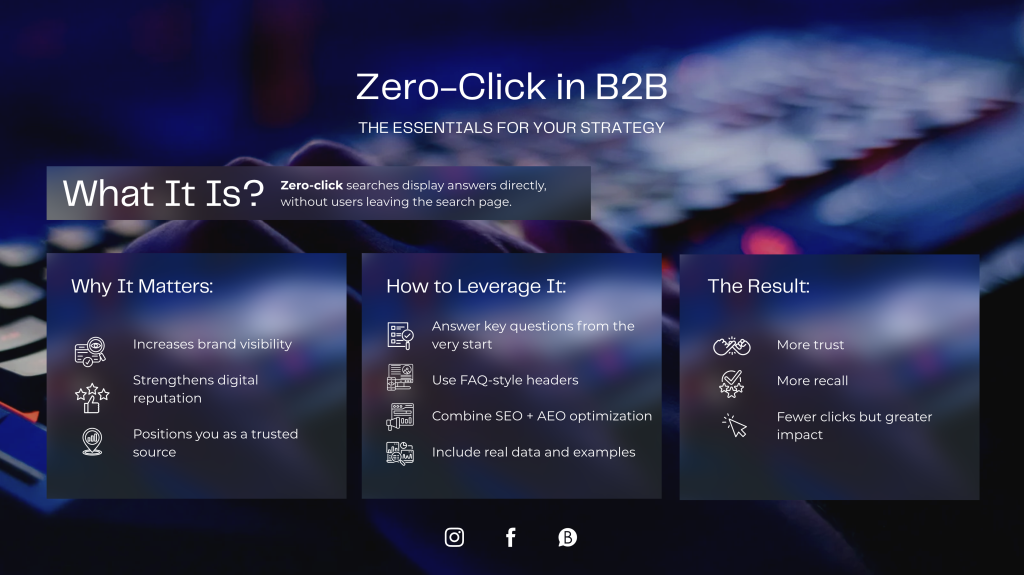
“Zero-click” refers to searches that users resolve without leaving the results page, whether it’s a featured snippet, a definition, a table, or even an AI-generated response.
In the B2B landscape — where decisions are rational, comparative, and collaborative, this is crucial. Procurement, marketing, and leadership teams all look for clear, reliable, and fast information. If your brand shows up as the answer they need, you’re influencing their perception long before a call or quotation request even happens.
It’s not just about being on Google. It’s about being the voice that informs, inspires, and builds trust.
How to get there: five practical steps
1. Start by answering, not selling.
Algorithms reward direct answers. Begin each piece of content with a paragraph that summarizes the main answer in two or three lines.
2. Structure with questions.
Use question-based headers (“What is…?”, “How does it work?”, “Why does it matter?”). They help search engines understand your content and make it feel more conversational and natural. When you write the way people ask, you connect with the way they search.
3. Use data that builds trust.
Sources, percentages, and concrete examples give authority. AI assistants and search engines prioritize verifiable information. Cite studies, mention trends, and include your own insights whenever possible.
4. Optimize for AEO (Answer Engine Optimization).
SEO is no longer just about keywords. Search engines now operate as answer engines, they value who is speaking, what they’re saying, and how authoritative that content is.
5. Combine content, PR, and credibility.
Your website isn’t the only place where your answers can appear. Mentions in media, events, or collaborations also feed search and AI systems. Turning an interview, success story, or press article into an “answerable” piece multiplies both its reach and long-term value.
What to measure beyond traffic
Success in a zero-click environment isn’t measured only by visits. More relevant indicators include:
-
Appearances in featured snippets
-
Brand mentions in AI-generated answers or media
-
Qualified leads that originate after viewing search content
-
Engagement metrics on cited content (time on page, downloads, shares)
The key is determining whether you’re part of the conversations that truly matter in your industry.
How to prepare your B2B content for Zero-Click: A quick checklist
☑️ Opening paragraph that answers the main question
☑️ Question-based headers
☑️ Verified data and credible sources
☑️ FAQ or Article schema on your website
☑️ Visible CTA within the first scroll
☑️ Link to a conversion or downloadable resource
Zero-click doesn’t replace traditional marketing, it complements it. It’s an opportunity to transform how B2B brands share their knowledge and authority. At Bindiva, we help companies turn their expertise into content that answers, connects, and converts. Because being found doesn’t always mean being chosen, but being remembered does.
👉 Want your brand to be the answer B2B decision-makers find first?
Schedule a strategy session with Bindiva and let’s design a plan that puts you where decisions begin.
Sources
-
Semrush: Zero-Click Searches: What They Are and How to Optimize for Them
https://www.semrush.com/blog/zero-click-searches/ -
Ahrefs (2023): How to Optimize for Zero-Click Searches in Google
https://ahrefs.com/blog/zero-click-searches/ -
HubSpot (2024): B2B Content Marketing Trends and Strategies
https://blog.hubspot.com/marketing/b2b-marketing-trends -
Think with Google (2024): The Evolving Search Journey in B2B
https://www.thinkwithgoogle.com/