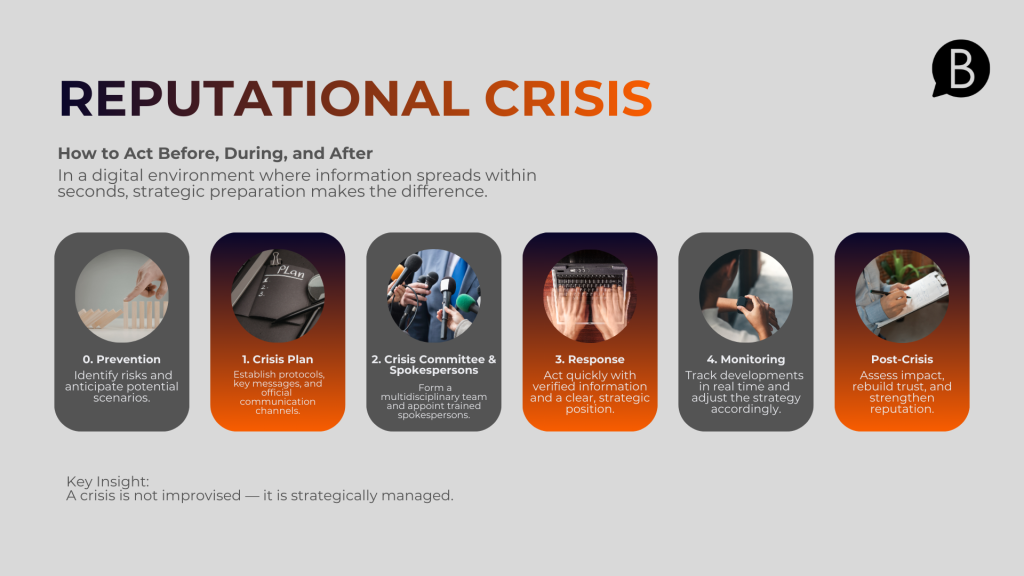
A Reputational Crisis: How to Act Before, During, and After
Learn how to prevent, manage, and overcome a reputational crisis with a professional corporate communications and PR strategy.
In a digital environment where information spreads within seconds, reputational crisis management has become a strategic priority for companies. A poorly handled incident can impact the trust of clients and collaborators, directly affecting brand value and business results.
Today, no organization is exempt from facing a reputational crisis: viral comments on social media, operational failures, information leaks, labor conflicts, accidents, or communication errors can escalate quickly.
These are the steps to follow for proper crisis management:
- Before the crisis: prevention and strategic planning
The best crisis management begins before any incident occurs.
A preventive analysis should consider:
• Operational risks
• Legal or regulatory risks
• Labor issues
• Digital threats and cybersecurity
• Dependence on critical suppliers
• Sensitive issues for stakeholders
- Crisis communication plan
A crisis communication plan allows organizations to respond quickly and maintain control. It should include:
• Potential scenarios and severity levels
• Message approval protocols
• Official communication channels
• Social media guidelines
• Media monitoring systems
- Crisis committee and spokespersons
A multidisciplinary committee ensures informed decision-making. It typically includes leadership, communications, legal, human resources, and operations, among others.
Spokespersons must be trained to deliver clear, empathetic, and consistent messages.
- During the crisis: rapid and transparent response
Depending on the situation, the committee evaluates whether it is advisable to issue an initial position based on confirmed information. However, in many cases it may be best not to respond when there is no solid basis and the crisis originates from rumors or unofficial information.
All information must come from official sources:
• Official press releases
• Corporate social media channels
• Formal internal communication channels
- Real-time monitoring
Social listening and media monitoring make it possible to adjust the strategy as the public conversation evolves.
These tools are extremely powerful for identifying risks and closely tracking the development of the crisis.
- Post-crisis
Once the critical phase has passed, the process of rebuilding and impact evaluation begins:
• Brand perception
• Relationship with clients and stakeholders
• Impact analysis
• Organizational culture
• Media positioning
Conclusion
Managing a reputational crisis is not only a reactive response but a key strategic discipline for business sustainability. Organizations that are prepared can not only minimize damage but even strengthen their reputation by demonstrating leadership, transparency, and responsibility.
Having a specialized partner in public relations consulting and strategic communication is essential to navigate an increasingly volatile and demanding environment.